Monitoring Marine Ecosystems - Integrating Field and Earth Observation
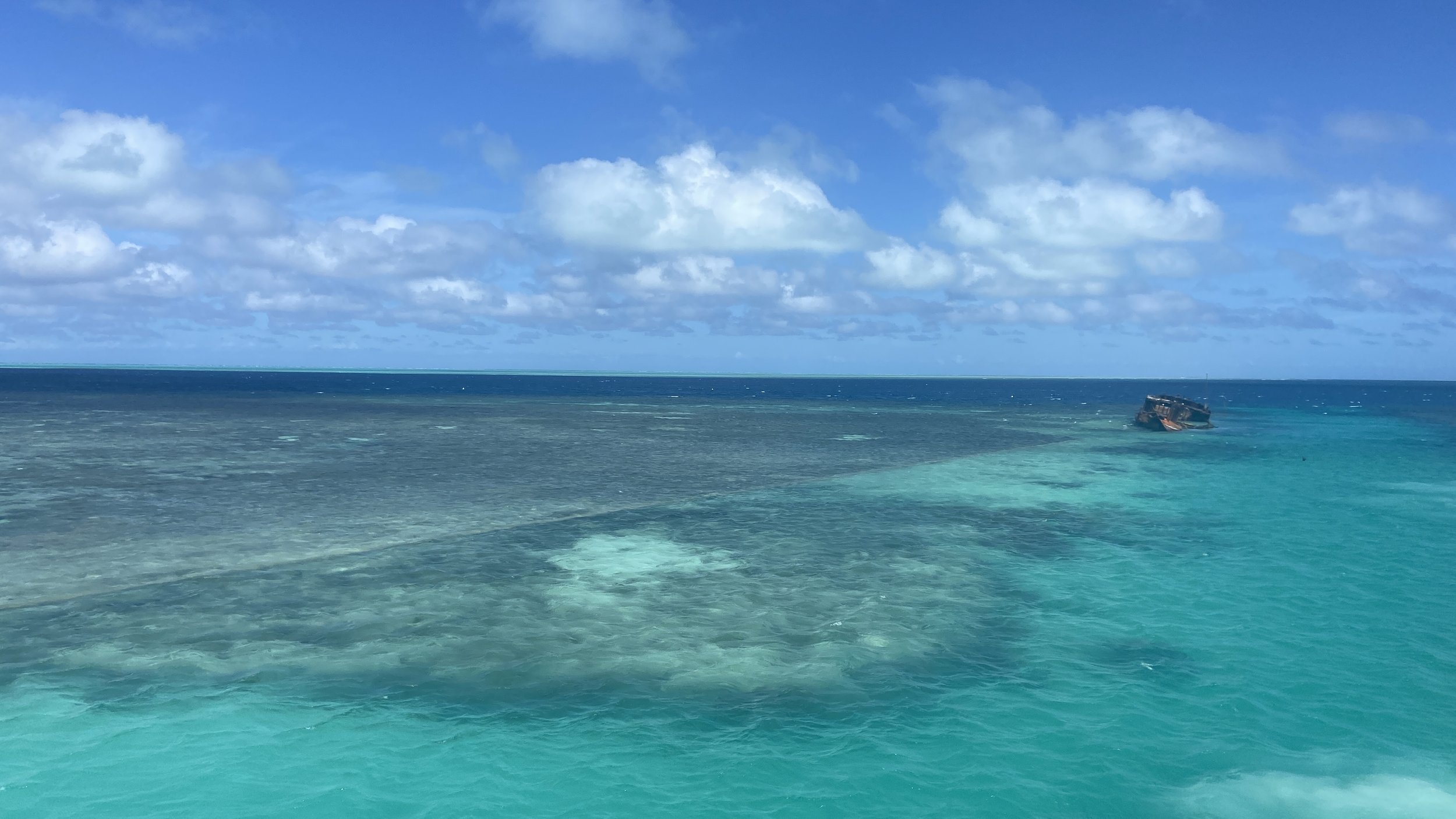
Welcome to the Marine Ecosystems Monitoring Lab, within the School of The Environment, at the University of Queensland (Brisbane, Australia).
We are focused on developing cost-effective applied approaches for mapping and monitoring marine ecosystems to answer targeted conservation and management questions.
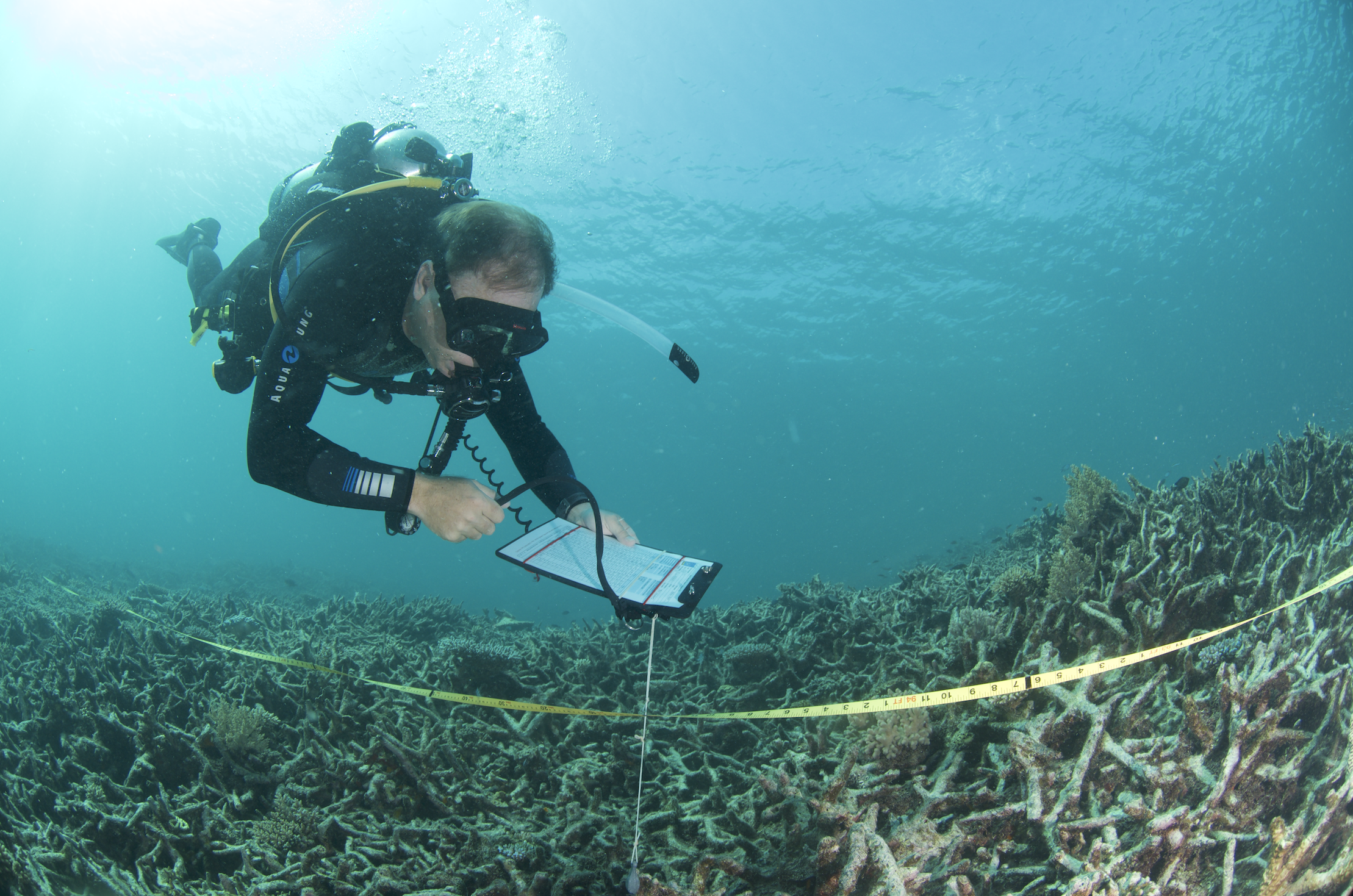
We integrate field data with earth observation imagery captured from underwater and/or above water platforms to provide information on benthic species composition, abundance and/or structure over time and space. Platforms could be divers, snorkelers, robots, drones, planes and satellites.
We work within multiple marine ecosystems such as shallow coral reefs, seagrass, kelp and mangrove habitats. These habitats occur across varied spatial extents, from small islands to global scales. For instance, our study sites include Moreton Bay, Heron Reef, the Great Barrier Reef, wider Australia, and Asia Pacific.
Marine Ecosystems Monitoring Researchers have a long-standing history with the University of Queensland’s Earth Observation activities through the Remote Sensing Research Centre, the Centre of Remote Sensing Spatial Information Science and the Biophysical Remote Sensing Group.
We engage with the local community, Indigenous groups, citizen scientists, researchers and management from start to finish, to ensure our research has the highest possible impact to support marine ecosystem conservation.
See our Research Impact.
Learn more about our research and it’s impact.
Recent Publications
Cowley, et al (2025) Insights into Seagrass Distribution, Persistence, and Resilience from Decades of Satellite Monitoring. . https://doi.org/10.3390/rs17244033
Sjafrie, et al (2026). A framework for an effective nationwide seagrass data collection: a case study for Indonesia. https://doi.org/10.1016/j.ocecoaman.2025.107968
Gillian et al (2025) Evaluating macroalgal hyperspectral separability in support of kelp mapping using Earth Observation, https://doi.org/10.3390/rs17203491
Davey et al (2025) A review of the application of coral reef condition indicators in conservation planning and monitoring.https://doi.org/10.1016/j.ecolind.2025.114222
Diederiks et al 2025), Two decades of coral carbonate production within and across geomorphic zones. https://doi.org/10.1007/s00338-025-02736-4
Smart et al (2025) Decadal monitoring shows seagrass decline and community shifts following environmental disturbance in Moreton Bay, south-eastern Queensland, Australia. https://doi.org/10.1071/MF25049
Lawson et al (2025) Broadscale reconnaissance of coral reefs from citizen science and machine learning. Environmental Monitoring and Assessment. https://doi.org/10.1007/s10661-025-14261-6
Rivera-Sosa, et al(2025) Six decades of global coral bleaching monitoring: a review of methods and call for enhanced standardization and coordination. https://doi.org/10.3389/fmars.2025.1547870
Carrasco Rivera, et al (2025) Remote Sensing Reveals Multidecadal Trends in Coral Cover at Heron Reef, Australia. https://doi.org/10.3390/rs17071286
Sansoleimani, et al (2025) Neotectonics have affected the geomorphology of the northern Great Barrier Reef https://doi.org/10.1007/s00338-025-02628-7
Lowe et al (2025) BenthicNet: A global dataset of seafloor photography for deep learning applications. https://doi.org/10.1038/s41597-025-04491-1

